The Trusted Connectivity Alliance (TCA) has published the first common methodologies for measuring eSIM environmental impact. Operators, connectivity providers and device makers now have one consistent way to back their environmental claims with evidence. Travelers who weigh a digital plan against a plastic card get a clearer basis for those claims.
What TCA published
TCA released the methodologies on 5 May 2026. It describes them as the first industry-led, common lifecycle assessment methodologies for SIM and eSIM products.
The goal is trust and transparency. TCA says environmental claims need credible, objective methods that leading industry players developed together.
TCA partnered with SE Advisory Services, which it describes as Schneider Electric's global consulting practice for the connectivity services industry. Any industry participant can access the methodologies by contacting TCA.
How the eSIM environmental impact method works
The methodologies follow the principles of the European Union's Product Environmental Footprint (PEF) Method. They define Category Rules (PEFCR) for SIM and eSIM products.
The assessment runs "cradle-to-grave." That span covers:
- raw material extraction
- processing
- distribution
- storage
- use
- disposal or recycling
TCA sets a firm limit. The methodologies are not designed to compare the environmental performance of SIM and eSIM products, either from the same manufacturer or across manufacturers.
Why a common yardstick matters
TCA says SIM and eSIM providers are innovating to deliver more eco-friendly products. Different ways of assessing environmental impact, it says, limit transparency throughout global value chains.
TCA Sustainability Working Group Chair Frédéric Moreira calls the release "an important step forward" for a consistent framework. TCA Board Chair Guido Abate points to the association's record of promoting interoperability and says common lifecycle assessments will support more sustainable practices across the connectivity ecosystem.
TCA commits to evolving the methodologies as market and regulatory developments arrive. It invites organizations committed to climate leadership to join and shape that work.
The 2025 sustainability numbers
The methodologies follow TCA market monitoring data on 2025. In its full-year release of 2 March 2026, TCA reported progress on cutting plastic waste and associated emissions:
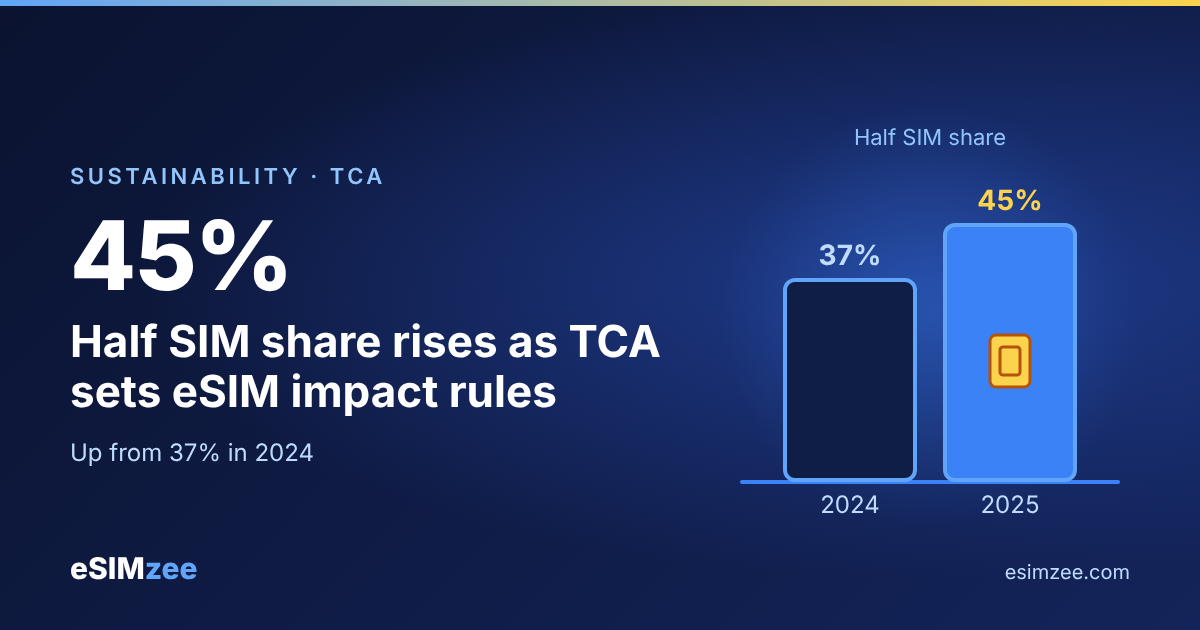
- 45% of all SIM volumes that TCA members reported were in the half SIM format, up from 37% in 2024.
- Over 40% of SIM volumes in Europe used eco-friendly raw materials.
- In the Middle East and Africa (MEA), more than double the volume of SIMs used eco-friendly raw materials in 2025 than in 2024.
- Half SIM shipments in MEA rose 40%.
The same release sets the scale. TCA members estimate that global eSIM shipments grew 18% in 2025 to a new annual high of 605 million. TCA estimates the total available market for traditional SIM at 3.5 billion units in 2025.
TCA members also raised delivered SIM volumes by 6% year-on-year. Physical SIMs remain a large part of the picture while eSIM grows.
What this means for travelers
Expect more providers to use environmental language. A common lifecycle method gives that language a standard to meet, and you can ask which methodology stands behind a claim.
Do not read the TCA release as a verdict that eSIM beats a physical SIM. TCA states the methodologies do not compare the two.
Choose your plan on coverage, price and data allowance first. Then use the provider's sustainability claims as a tiebreaker once they cite a recognized method. Start with the eSIMzee provider comparison to line up plans side by side.
Sources
- Trusted Connectivity Alliance Publishes First Common Methodologies to Assess the Environmental Impact of SIM and eSIM Products, Trusted Connectivity Alliance, 5 May 2026
- Trusted Connectivity Alliance Members Confirm Acceleration of Global eSIM Growth in 2025, With Estimated eSIM Shipments Increasing 18% and Consumer Adoption up 43%, Trusted Connectivity Alliance, 2 March 2026